Showing posts with label Art. Show all posts

Monday, October 14, 2013

Monster landscapes

This was too fun and too Halloween-y to not share. From the blog Twisted Sifter:

You know how thrift stores often have a load of outdated, sometimes decrepit landscape paintings for sale? A few artists thought they would breathe new life into them by painting in monsters (which, if you'll notice, they did smartly-- matching each painting's original brush stroke style, general color palatte, etc). If only I had inherited my mother's painterly skills....


 My personal favorite:

Monday, January 21, 2013

27 and Basquiat

 I found out today that Basquiat was 27 when he OD'd on heroin (1988) and deprived the rest of us of an artistic cannon that could have, should have, spanned a full lifetime.

I'm 27, too.

A friend of mine took the time to go to Basquiat's grave in Brooklyn. I thought that was a compelling sojourn for January 21st, 2013, the date of President Obama's second inauguration and Martin Luther King, Jr. Day.

Jean-Michel Basquiat lived one of those lives that puts us normal 27-year-olds to shame. A gifted artist--really, one of those rare people who merit the title of genius-- he was adept at drawing by age 4, trilingual by age 11. He grew up in a tumultuous Brooklyn household to a Haitian father and a Puerto Rican mother, who was committed to a mental institution when he was 11. He spent his teenage years running away from and then being brought back home, on and off the streets. He drew postcards and sold t-shirts to support himself and began a notorious graffiti art track. "SAMO" was he and his tagging partner Al Diaz's calling card, which stood for "Same Old Shit." They tagged high and low profile buildings alike. I loved this quote regarding Basquiat's graffiti moving beyond mere public defacement:

"SAMO marked the witty sayings of a precocious and worldly teenage mind that, even at that early juncture, saw the world in shades of gray, fearlessly juxtaposing corporate commodity structures with the social milieu he wished to enter: the predominately white art world. ”
— Franklin Sirmans, In the Cipher: Basquiat and Hip Hop Culture

I've never really dug into Basquiat's story, just casually noted his raucous canvases on the walls at my favorite art museums. He is held up as a black James Dean, a shooting-star-like presence in the irreverent 1980s art scene: the first black American man to break into the pristine white high art world (and many will argue, the first AND the best to date).

J-M B., Leeches, Daros Collection, Switzerland, 1983


If you know me, you know I am attracted to printed words and text in art. What a fantastic mind! You can feel the energy, the frantic evaluation of his world and its ills, leaching through the canvas.

"Basquiat's canon revolves around single heroic figures: athletes, prophets, warriors, cops, musicians, kings and the artist himself. In these images the head is often a central focus, topped by crowns, hats, and halos. In this way the intellect is emphasized, lifted up to notice, privileged over the body and the physicality of these figures (i.e. black men) commonly represent in the world."
— Kellie Jones, Lost in Translation: Jean-Michel in the (Re)Mix

Fascinating how Basquiat the man mirrored those things, those idols, that inspired and tantalized him. I wonder if that's one of the reasons he's so beloved by pop culture today; not only is he a tragic figure, his art reveals the types of concentrated musings and the frustrated, angry, fruitful rages we each encounter within ourselves while passing struggling through modern life.

Basquiat had a musical career, too, rapping with friends and designing album covers (now highly coveted objects in the art world). He counted Andy Warhol as a good friend and collaborator. Their spin on the Olympic rings still intrigues me; they totally take away the vaunted symbolic capacity of the rings and make them into something more grounded, more gritty. The painting, to me, must be how many athletes think of the games when they're still 2 years out: an elusive mistress, a demanding, demeaning boss, and a haunting dream.

Andy Warhol and Jean-Michel Basquiat, Olympic Rings, 1985, Acrylic and silkscreen on canvas, Gagaosian Gallery


Basquiat's boisterous artistic jaunts around town brought him to the attention of Artforum magazine in 1981, which ran a story calling him "The Radiant Child." Larry Gagosian, infamous New York art dealer/ art king-maker, allotted Basquiat several solo shows in his prestigious galleries and gave him the run of the studio space in his own private home in Venice.

I used the word irreverent already and that's the best way to describe him. You hear scraps of information, whispers of urban legends about all of Basquiat's crazy stunts: painting in Armani suits, scribbling weed-inspired cartoons on magazine covers that later sold for thousands of dollars, painting on women's skirts, etc. The comparison between he and Jackson Pollock is striking (especially late JP when he's angst-y and starts putting human faces back in his paintings). Both lived fast, died young, one was responsible for the machismo Abstract-Expressionist movement, the second made waves as a Neo-Expressionist who also boldly addressed race issues and tensions with his jarring, colorific, wildly composed pieces.

Jackson Pollock, Portrait and a Dream, Dallas Museum of Fine Arts, 1953

J-M B., Untitled Acrylic and Mixed Media on Canvas, 1984 
Sensational, haunting, challenging, uncomfortable, unforgettable, intellectual, enterprising, inspiring, vivid, violent. It's late now, Obama may have even finally gone to bed. What a world we live in. Freedoms are hard won, it's good to remember that, thanks Basquiat. Freedom of expression, of life, of passion.

Tuesday, September 18, 2012

You ready for a little art?

In a very, very old book, Mitralis de officiis, Mr. Sicard of Cremona (1155-1215) traces the symbolic significance of the architectural elements of Christian churches. Windows, for examples, are the "Doctors of the Church," enabling the divine light to the reach the faithful. A little farther down, Sicard also compares the windows to the five senses, which "facilitate the understanding of the Holy Word. [...] The building's walls represent the religious, whose prayer and faith constitute the unity of Christians." (From Eric Palazzo's "Relics, Liturgical Space, and the Theology of the Church," in Treasures of Heaven, Yale University Press, 2010.)

I know this quote refers to the symbolism of infamous medieval windows and walls like these:

Abbey Church of St. Madeline, Vezelay, FR. Built in 1104 A.D.
Stained glass apse in the Basilica of St. Denis, Paris, FR. Built 1135ish.
But as I read I kept thinking of these:

Palmyra LDS Temple.
Doctors of the Church? The five senses helping us understand the Word? I can see it... 

And what about the walls, symbolizing the faithful, the members, united in prayer?


Yes.


Absolutely, wonderfully yes.

I am loving my medieval relics class. I wriggle inside during each seminar with the inner joy of knowing I also believe, like those who lived 1,000 years ago, that Heavenly Father is available to reach and to talk to, as we come to him in certain sacred stone edifices (albeit without a lot of the complicated liturgical elements like saints and relics). I don't know if my professor is religious or not, at this point in my studies I simply assume my professors are agnostic and work backwards from there. At any rate, he teaches about the beauty of reliquaries and basilicas with the gravitas, the reverence, and the awe that such creations deserve. As one who proudly holds a recommend to enter the House of the Lord, the temple of the Latter-Day Saints, I find the serious discussion of architectural and artistic effort, planning, and careful design in worship of God extremely fascinating and, in a way, familiar. To be continued...

Thursday, February 23, 2012

Everything this man says is solid gold.

The Good Greatsby: my new favorite funny blog. Read him. Roll on floor laughing.

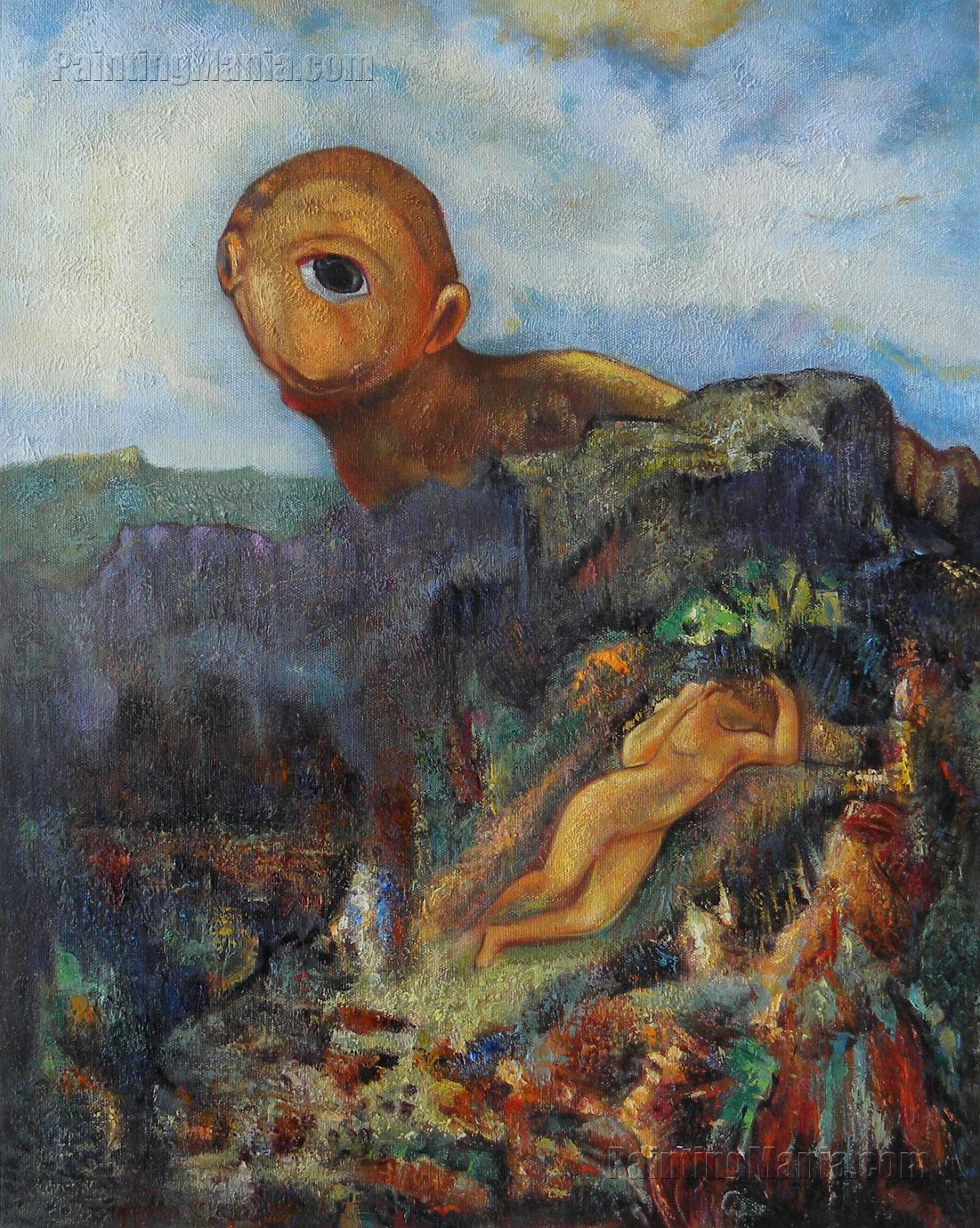
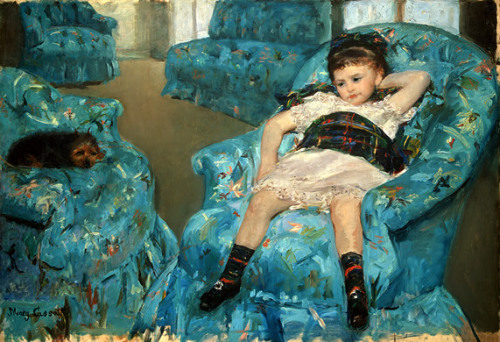
It's 11:23 pm and the right half of my brain won't stop clicking. Here is a random assortment of famous artworks that I find hilarious. Have you ever seen funny art? Did you even know you can laugh at art?? Oh yea! People only seem to remember that in modern art galleries, when faced with Louise Bourgeois sculptures (at right. tee hee). Apparently Impressionism tickles my funny bone the most: the great Mary Cassatt AND Odilon Redon made my list. Who's on yours?

Odilon Redon. The Cyclops. 1914.
Mostly I love that it's by an artist named Odilon. And it's creeptastic.

Ben Shahn. Still Music. 1948. The Phillips Collection. 
Flamingoesque music stands. Painted over what looks like an Easter egg background. 

Mary Cassatt. Little Girl in a Blue Chair. 1878. NGA.

Sit up right now or I will MAKE you sit up!!!
No but seriously, this one's a compositional masterpiece if you look at it long enough. Brilliant balance of space.

Auguste Rodin. Monument to Balzac. 1891-1898. Hirshhorn Museum and Sculpture Garden.

Judith Shea. Post-Balzac. 1991. Hirshhorn Museum and Sculpture Garden.

Rodin's Monument to Balzac is already one ridiculous piece of honorary sculpture (at its creation people called it "the Frog," "Balzac in his pajamas," etc.). 100 years later the artist Judith Shea monumentalized Rodin's ridiculousness by creating a bronze of just Balzac's coat, since after all, it basically OWNS the lion's share of the viewer's attention in the original.

Look it's me, back when I was a little bitty intern! Yes my coat is simultaneously voluminous AND shapeless. But so warm! I was going for a wry grin in this picture. Just lettin' you know...


Monday, February 20, 2012

Oh yea, that crucial thing...

Have I mentioned the fact that my qualifying paper (my school's version of a Master's thesis) is due in TWO WEEKS?


Have I described to you the scene of chaos that is my room right now? Books in piles. Notes, drafts, illustrations, inspirational quotes pasted haphazardly everywhere. And in the middle of the storm, my new computer whirs, calm and serene. It holds the key, my beautiful rough draft, which I have been furiously, tragically hacking away at for the last 96 hours. That C. S. Lewis metaphor about houses that the Savior painfully remolds into mansions seems applicable here. Come on, little paper. You've got genius in you. No one has ever addressed the topic of King Menelik's diplomatic, artistic self-presentation quite like you. We can do it. Be cool. Like King Menelik.

My hero.

Also, thanks JBro for this picture, it is truly a work of art from which I get daily inspiration (possibly because the blankies make her look like a little African baby and immediately put me back into paper writing mode):


Also, congrats to my approximately 18,000 friends who have announced they are pregnant. 

Also, don't actually pay attention to my inclusion of the picture of a panic button above. I'm not panicked... that will probably kick in next week...

Friday, January 13, 2012

It is a truth universally acknowledged...

(I will give $10 to anyone who can find me an American Mormon female between the ages of 12 and 65 who doesn't know the end of this quote) Everyone say it with me now:

... That a single man in possession of a good fortune MUST be in want of a wife!

-Jane Austen, prophetess.

I feel like her statement is in fact the only truth left in the world that may lay claim to universal acknowledgement, and that only because of its trifling consequence (good luck to all those single rich men out there. Your life is hard, wah wah).

Every where I turn I see truths of much greater import acknowledged only by sections of the population. Some of the most important truths-- when life begins, the existence and character of God, the efficacy of corporate taxation in economic improvement-- are hotly debated.

The more I thought on these debates tonight, the more I became aware of another fairly inconsequential universally acknowledged truth: all art either professes to reveal truth, or delights in rendering a fantasy.

As always, I began to run down my mental timeline of Western art history to find favorite pieces that would help substantiate my theory. Here are some of the world's most famously truthful artworks, followed by equally famous works that delight and amaze us through their impossible, imaginative, other-worldliness. Feel free to fight me on any of my classifications; in fact, I could use a good art debate and I have deliberately chosen artworks I had to think carefully about before I relegated them one camp or another.

TRUTH


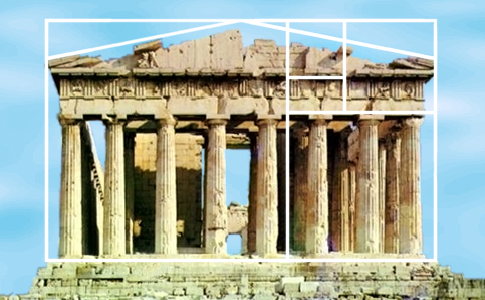
The Parthenon: truth in proportions (Golden ratio, Da Vinci Code, anyone?)


Leonardo: truth in anatomy (a truth punishable by death at the time, as examination of corpses was blasphemous and forbidden in Italy)


Courbet: Truth/Reality in choice of subject matter. At a time when Parisian art was a little heavy on the naked nymph side, Corubet chose to examine, across HUGE canvases, the life of the poor and uneducated of France.


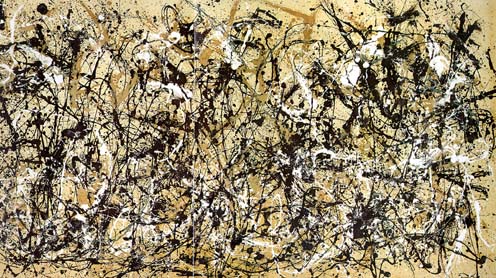
Jackson Pollock: Truth in gesture. Debated about this one for a while, but he goes on the truth side, for now, despite his misogynistic personality...


Andy Warhol: Truth in irony. I found myself recently explaining Warhol's repetative working method to a missionary recently (random!)

FANTASY


Paolo Uccello: Fantasy in three dimensions (look how fastidiously he drew lines clashing here and there, especially on the ground, to give you a sense of a great, deep arena of battle!) Also, fantasy of power. Uccello was one of the many masters under the thumb of the Medici. Here he pays homage to his patrons and subtly exaults them via symbols such as the orange representing the Medici family.


Boucher: Fantasy of the French bourgeois Utopia. I think we can all agree that this is NOT an accurate depiction of every day life for the majority of seventeenth century Frenchmen and women.


Van Gogh: Fantasy of emotions. He paints emotions as if they had the ability to alter the world, when in fact it is the other way around.


Jacque Lipchitz: the fantasy of futurism. Modern life breaks up movement and the centrality of forms and bodies into confusing alternations between nothingness and weightiness. (aaaaah modernist mumbo jumbo- the ultimate fantasy that probably only 10% of the viewers buy into).


Jenny Holzer: Fantasy of truth in the mass media. I have so much to say about Jenny Holzer. Another day. Cliff notes version: She creates scrolling lightworks that spell out messages that don't make sense, and often contain jarring, threatening allusions. She does so to make us realize how much we are conditioned to believing what we read in the media.

Thursday, December 1, 2011

Why I'm never, ever late for movies

1. I love previews, like, as much as whole movies.
2. I love titles sequences; they're like artistic microcosms of whatever movie I'm about to see. I MUST be on time to the movies, because the critical analysis side of my brain gets a free 3 minutes of free-for-all dissection-- "why did the director choose to show this? Why that font? Imma have to buy this soundtrack! Ooh I like that shot!"-- before settling into good old fashioned American movie-zombie mode.

I loved this video, it showcases some of the most famous title sequences by the brilliant Saul Bass. Watching it, I really get a sense of how cutting edge each of these graphics must have appeared when they premiered. What an amazing career. The list of movies corresponding to these clips is found here.


The Title Design of Saul Bass from Ian Albinson on Vimeo.


Of course, the most celebrated title sequence in recent memory is this one (you know you haven't seen it a while, let it blow your mind again):


What are your favorite opening credit sequences? I know I'm missing dozens of good ones... I'm thinking Hitch first of all, oddly enough. It's just so cute!!

Just for kicks, here's the greatest ending  sequence I've ever seen. Pixar must have an art history major on staff. I kicked back in my seat til the end of these credits, shouting out the names of each artist as they came along and laughing my head off. Isn't there anything that Pixar CAN'T do??


I wrote them down for you. It's a slow lunch.

Lescaux cave paintings
Egyptian hieroglyphics
Greek funerary vase paintings, the Black-Figure period
Roman/Pompeiian mosaics
Leonardo’s sketchbooks (he sketch the movement of falling water)
Michelangeo’s St. Peter’s Basilica blueprints
Venetian nautical paintings (highly celebrated for their ethereal sunlight and water)
Pointilism! Georges Seurat, everywhere!
Expressionism, vag Gogh- Look at those sunflowers!

Friday, November 11, 2011

I had a long lunch/I needed a creative outlet

Found this on an educational tumblr today:


Because I was REALLY bored 
Because the attempt to fit the entirety of Western art history into 9 smiley faces made my eye twitch, I decided to pare it down to just an American 20th Century History of Art (much more sensible):


I will not apologize for the use of the Comic Sans font. I was having a moment of nostalgia, and besides, I feel it gels really well with the smiley face theme.

Monday, October 17, 2011

Sculpture and I are having a moment

Tony Cragg. Outspan. 2008.
Maybe it's because this French impressionist class is so theory-heavy that I feel like stabbing right through every Manet painting I look at just to make the discussion about subjectivity STOP, or maybe it's because my conservation class is very biased towards objects; either way, I am really having a good time thinking about sculpture lately. Theorizing, ruminating, and thoroughly being captivated by the awe-striking qualities of art in three dimensions. Come with me, let's go there together.

GREAT example of how painting draws you into an illusory space.
Andrew Wyeth. Wind From the Sea. 1947.
One of my favorite paintings in the National Gallery.
Normally, I'm all about paint and photography. Two-dimensional art intrigues, puzzles, and delights me with its inherent theatricality. The creation of 2D art will always, to some degree, involve the artist thinking critically about how he or she is going to TRICK you into believing you're looking beyond the surface of the work and into some imaginary depth (well, actually, that statement could be contested when it comes to abstract expressionist and minimalist paintings*, but we'll just stick with my stereotype for the moment).


In short, 2D art involves illusion. 3D art, aka sculpture and installation art, involves... movement.

Henry Moore. Reclining Figure: Internal and External forms
(Working model)
. Bronze. Cast 1952-53.
Hirshhorn Museum and Sculpture Garden
What a change that makes! What a different experience, looking at sculpture! Instead of using your eyes, you must use your eyes AND your legs. Instead of a painstakingly-wrought single viewpoint (as in a painting), you have 360 viewpoints! The sculptor has to consider all of them in the creative process. He or she gets down and dirty-- and often quite clever-- when manipulating his or her materials. Their works of art must slide from one vantage point on over into the next seamlessly. In its finished form, sculpture has the potential to be a, well, for lack of a better word, a sensual experience. Yea, I said it. Sculpture possesses so much more force in a gallery, and it's because it takes up your space. Or rather, you take up ITS space. While you may glide past paintings, you must maneuver around sculptures (or suffer the wrath of the security guards...). I had a brief love affair with an ever-arresting Henry Moore bronze this weekend at the Hirshhorn (See above). I literally couldn't keep my hands off it, but I was saved at the last moment (before I actually touched it, don't worry, I'm an obedient museum patron), I was lured away by the siren call of a blinding Dan Flavin light installation.


Like a moth to one of those moth-zappers... I just can't help myself. ^Dan Flavin, untitled (to Helga and Carlo with respect and affection), 1974. Flourescent lights. It's glorious! You can't tell from this picture, but this installation artwork stretches about 40 feet across the length of a gallery in the Hirshhorn. Wish I had people in this picture so you could get a sense of its fabulous dimensions. The light squares come up to about my hip, just think of it that way. I just love Dan Flavin. I love that he uses clean lines, the simplicity of light fixtures, to reinvent a gallery. The light sweeps over you and the museum itself, so that you can't ever quite assertively say, "THIS is where a Dan Flavin light sculpture comes to a halt." You just can't fence it in like that.

Picture I took on my cell phone from one end of the gallery looking towards the other end of the gallery this weekend at After Hours. C'est magnifique, non?

Ever since reading over The Agony and the Ecstasy this summer (a fictionalized 1960s biographical novel of Michelangelo, which cut me to the core- how DARE the author actually put words in The Immortal's mouth, pretend to know what he was thinking when he created The David??), I have renewed my love for Renaissance sculpture. Maybe that's where this all started. I re-Googled all my favorites: Michelangelo's highlights, Claus Sluter's priestly sculptures around the tomb of Philip the Bold, Bernini's Rape of Proserpina, etc. Mandatory illustrations of said masterpieces:

Two of the Sluter Mourners - Only about 18 inches high,  they ring the tomb of Philip the Bold in Dijon. Their deep-cut folds and touching expressions of angst have intrigued art historians and visitors for centuries. Look, 3D views of each sculpture found HERE, enjoy!
Rape of Proserpina. Really this viewpoint is all you need to see.
Fingers indenting into a thigh... BUT IT'S ALL MARBLE!!!!!!!!!! GAAH!!! MY LITTLE BRAIN'S GOING TO EXPLODE!
Tony Cragg. Elbow. 2008.

Ahem. Despite the wonders of Renaissance-era naturalistic sculpture, I still find myself equally enthralled by modern and contemporary sculpture. It absolutely astonishes me. In an era where innumerable images arrive onto my laptop as fast as I can click, the presence of contemporary sculpture, the way that it accosts and silences you, its simultaneous monumentality and serenity, makes for an invaluable and irreplaceable artistic experience in my life of looking. Its use of plastics, glass, iron, found materials and electricity... I find a little bit of my world reflected back at me in each of these media. That's what keeps me intrigued, I think.

GASP! I just figured something out! Remember how I was saying 6 inches ago that abstract expressionist and minimalist painting could arguably NOT be about theatricality? Here's some Barnett Newman and Clyfford Still to illustrate my point:

Newman's Adam. 1952. Tate.
Still's 1948-C. 1948. Hirshhorn.

What you see is pretty much what you get here, huh? No depth, no illusion. Just glorious meditations on paint over canvases.

MAAAAAAAAYYBE the modern/contemporary sculptures of Henry Moore, Dan Flavin, Tony Cragg, Louis Bourgeois, and the installation work of Matthew Barney, Olafur Eliasson, and Janine Antoni, to name a scant few, have fired my imagination of late because they, in their very physical-ness physicality-- in the way that they order me around a gallery, alter my ability to see, and affront my every sense-- have surpassed painting as the more theatrical type of artwork! Only I am the actor!

Cheers to you if you are still following me. Crap. I'm beginning to sound like Michael Fried, I can feel it. Milan, Maggie, and Erin, I expect only you to be keeping up with me.


M. Barney's The Deportment of the Host. MOMA. 2006.
Cast polycaprolactone thermoplastic and self-lubricating plastic
The point I want to end on is this: one of the reasons I tend to stay away from studying sculpture is because it feels too daunting. It requires too much memory. I experience so many more emotions when I wind my way around Matthew Barney's lustrous The Deportment of the Host installation than I do when facing, say, a Hiroshi Sugimoto photograph. It always feels nearly impossible for me to even begin to explain my thoughts about sculpture, or think critically about what the artist has done or may be trying to say through his or her work, when it comes to sculpture and installations. 360 ways to look at it, remember? But that doesn't mean I don't love to stop by and continue my love affair with the 3D media. It just means we will always be working things out. I will be a forever fervent admirer, and it will always be invading my space. Wouldn't have it any other way.


Friday, October 7, 2011

Mournfully kicks an orange leaf down the street...

In case you all have forgotten since last year, may I remind you:

I hate all seasons but summer. 

Dang you, influx of pumpkin recipes and hoodies!!!!!!!!!!!!

Sunny DC Row houses

Sunny National Gallery Garden and National Archives building

Sunny Neoclassical architecture, DC's buildings' bread-and-butter

Did anyone else catch this pic on hulu???? BRILLIANT play on Seurat!
I might have to do a whole post on how this Office spoof is actually a brilliant intellectual... well, spoof, of this masterpiece:
Mostly I love it because it makes the greatest cameo ever in Ferris Bueller.